

Why longevity must mean more than survival
We are living longer than ever. In most OECD countries, life expectancy now exceeds 80 years. Medical science has extended lifespan by tackling infectious disease, improving sanitation, and advancing acute care. Yet this triumph carries a shadow: the final decades of life are too often spent in decline — bodies frail, minds clouded, spirits isolated.
The true measure of progress is not how long we live, but how well. This is the frontier of healthspan: extending the years of physical regeneration, emotional renewal, and cognitive clarity. It is a shift from quantity of years to quality of years — and it may prove one of the most consequential challenges of the 21st century.
Beyond lifespan
The World Health Organization estimates that people spend on average the last 8–10 years of their lives in poor health. Dementia, frailty, and chronic disease impose not just suffering, but soaring costs. In the United States alone, the annual burden of Alzheimer’s disease exceeds $300 billion.
The challenge is not only physical. In Sweden today, mental illness accounts for nearly half of all sickness-related absences, with anxiety, stress, and depression leading causes. Public health experts increasingly describe this as having epidemic proportions — a silent burden that reduces quality of life as much as chronic disease does.
Yet the gap between lifespan and healthspan is not inevitable. Research in neuroscience, nutrition, exercise physiology, and preventive medicine shows that decline can be delayed, and vitality extended. What is missing is not knowledge, but coherence: aligning science, policy, and culture around the goal of thriving longevity.
The three pillars of healthspan
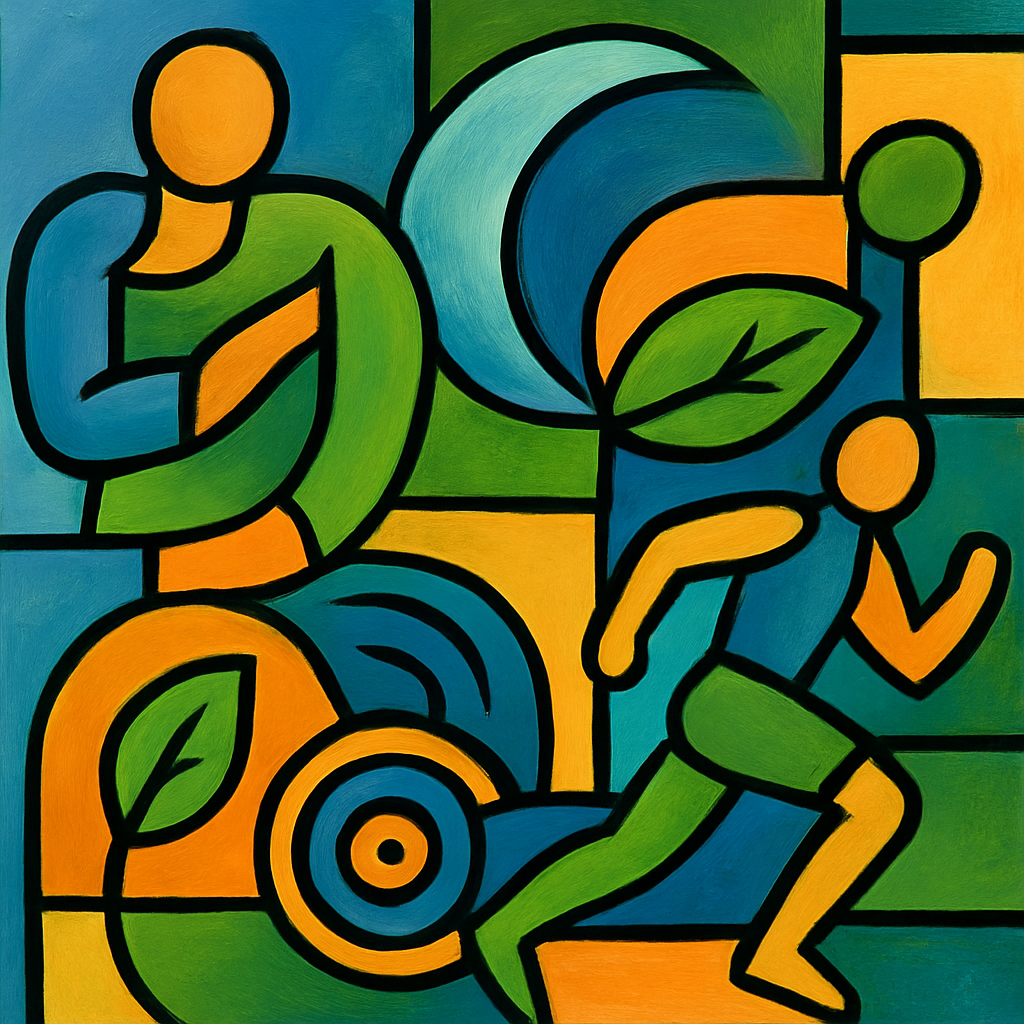
Healthspan rests on the interaction of physical, emotional, and cognitive regeneration. Each pillar supports the others; when one weakens, the whole edifice suffers.
Physical regeneration
At its foundation, healthspan depends on the body’s ability to renew itself. Three elements are indispensable:
– Movement: Regular strength training, cardiovascular activity, and flexibility work preserve muscle mass, heart health, and independence. Peter Attia and colleagues highlight “stability, strength, and VO₂ max” as critical predictors of late-life autonomy.
– Sleep: Deep and restorative sleep underpins repair, memory consolidation, and immune resilience. Chronic sleep deprivation, now endemic in modern societies, accelerates decline across nearly every system.
– Nutrition: Diets rich in whole foods, fiber, and plant-based diversity lower risks of diabetes, cardiovascular disease, and cancer. The science is clear: ultra-processed foods, excess sugar, and imbalance accelerate degeneration.
Physical regeneration, however, is not only an individual pursuit. Urban design that privileges walking and cycling, food systems that make nutritious options accessible, and healthcare incentives that reward prevention are systemic choices. Without them, advice to “eat better” or “move more” rings hollow.
Emotional regeneration
Longevity without belonging is empty. Emotional renewal — marked by connection, purpose, and resilience — is as vital as cholesterol levels. Robert Waldinger’s Harvard Study of Adult Development shows that social ties are the strongest predictor of long-term wellbeing.
But modern life increasingly depletes rather than replenishes. Burnout cultures, digital isolation, and the erosion of community structures drain emotional reserves. Emotional regeneration requires intentional spaces for recovery: relationships of trust, communities that nurture, and cultures that value downtime and joy as much as productivity.
Cognitive regeneration
Cognitive decline is among the greatest fears of aging. But maintaining clarity is not simply about staving off dementia. It is also about resisting the erosion caused by permanent cognitive overload — workplaces and digital environments that bombard attention with no time for recovery.
Cognitive regeneration demands balance. Sleep, nutrition, and exercise all play roles. But equally important are practices that protect attention, enable deep work, and foster lifelong learning. Neuroplasticity research shows the brain can remain adaptable well into advanced decades, provided it is not chronically depleted by distraction.
Societies that design for cognitive health — from education systems supporting lifelong learning to workplace cultures that balance intensity with recovery — create environments where clarity endures.
A systems lens on longevity
The three pillars reveal that healthspan is not merely a private project of gym memberships and mindfulness apps. It is a systems challenge. Just as supply chains or energy grids require resilience, so too do human lifespans.
Consider cities. Urban planning that integrates green spaces reduces stress, promotes activity, and enhances air quality — simultaneously supporting all three health pillars. Or consider finance. Pension systems that reward longer working lives without investing in midlife reskilling risk trapping societies with aging populations unable to thrive cognitively or emotionally.
Healthspan coherence means aligning policies, incentives, and environments so that individual choices are supported, not undermined, by collective design.
The economics of healthspan
The economic stakes are enormous. The OECD projects that by 2050, one in three citizens in advanced economies will be over 65. Without better healthspan, the costs of long-term care could overwhelm public budgets.
Conversely, improving healthspan could unlock what some call the “longevity dividend.” The Milken Institute estimates that even modest reductions in chronic disease could add trillions to global GDP by keeping people active, productive, and engaged. Companies are beginning to respond, from longevity-focused biotech to workplace wellbeing initiatives. But without systemic alignment, efforts remain fragmented.
Coherence, not optimization
The dominant model of healthcare remains reactive: treating disease once it appears. This is efficient in the short term — fewer upfront costs, interventions delivered at crisis point — but incoherent in the long term. Systems designed around hospitals and acute care buckle under chronic burdens.
Coherence requires investing earlier: in preventive care, nutrition, mental health, and lifelong learning. It means designing institutions and economies that recognize healthspan as infrastructure — as fundamental to resilience as energy grids or transport systems.
This is the deeper link to the EIG compass:
– Ecology: Acknowledge that human health is inseparable from planetary health. Pollution, climate change, and biodiversity loss all erode longevity.
– Integrity: Align incentives — shifting healthcare, insurance, and pensions away from short-term cost-cutting toward long-term vitality.
– Generativity: Ensure that investments in healthspan strengthen the capacities of future generations, not just extend survival for today.
A leadership challenge
Leaders across sectors must now embrace healthspan as strategic. For governments, this means rebalancing budgets toward prevention and education. For employers, it means valuing resilience and wellbeing as sources of productivity. For investors, it means recognizing longevity as both an opportunity and a responsibility.
The framing shift is profound: from efficiency to coherence, from lifespan to healthspan. In this light, longevity is not simply about “adding years to life,” but “adding life to years.”
“The true measure of progress is not how long we live, but how well.”
The new frontier
The 20th century was defined by lifespan gains. The 21st will be judged by healthspan. Nations that align systems to support physical regeneration, emotional renewal, and cognitive clarity will reap not just economic dividends, but social and moral ones.
The question is whether we will settle for lives that are longer yet narrower — or choose coherence, designing societies where people remain strong, connected, and clear-minded well into advanced age.
The frontier is open. Healthspan is waiting to be claimed.
***
About Bluerain *Coherence* Series
This essay is part of a broader collection exploring how valuation, healthspan, collaboration, longevity, and biodiversity can be re-aligned with the rhythms of life — at a pace that enables regeneration rather than exhaustion.
The purpose of this compendium is to:
– Contribute meaningfully to public discourse on systems change and intergenerational strategy
– Offer fresh language and framing for leaders navigating complexity
– Share what we are learning, unlearning, and building in real time
We welcome dialogue, respectful critique, and collaboration — to deepen a shared understanding of what it means to steward coherence in a time of disruption.
For inquiries or conversation, please reach the author via linkedin.com/in/martinstuder.
About the Author
Martin Studer is an entrepreneur and impact investor focused on sustainability and longevity. Trained as an economist and certified public accountant, he brings decades of leadership experience in finance, governance, and executive management. As founder of Bluerain Partners, a Swiss family office, he works globally on projects spanning climate resilience, healthspan innovation, and intergenerational stewardship.
About Bluerain Partners Group
Bluerain Partners Group AG is a privately held, multi-generation family office headquartered in Switzerland. We do not offer commercial services or raise external capital, while some of our subsidiaries may do.
Our work is anchored in long-term purpose, driven by the belief that meaningful progress requires curiosity, collaboration, and courage.
We engage globally in projects that span climate resilience, health span and longevity, and the evolving nature of work and technology. We do so through investing, advising, governance, and venture development — always with an emphasis on coherence across generations, disciplines, and geographies.
These essays are authored by Martin Studer in a personal capacity. They reflect his experience, reflections, and aspirations — and may not necessarily represent the formal positions of Bluerain Partners Group AG, its subsidiaries, affiliated projects, or partners.
info@bluerainpartners.com.