

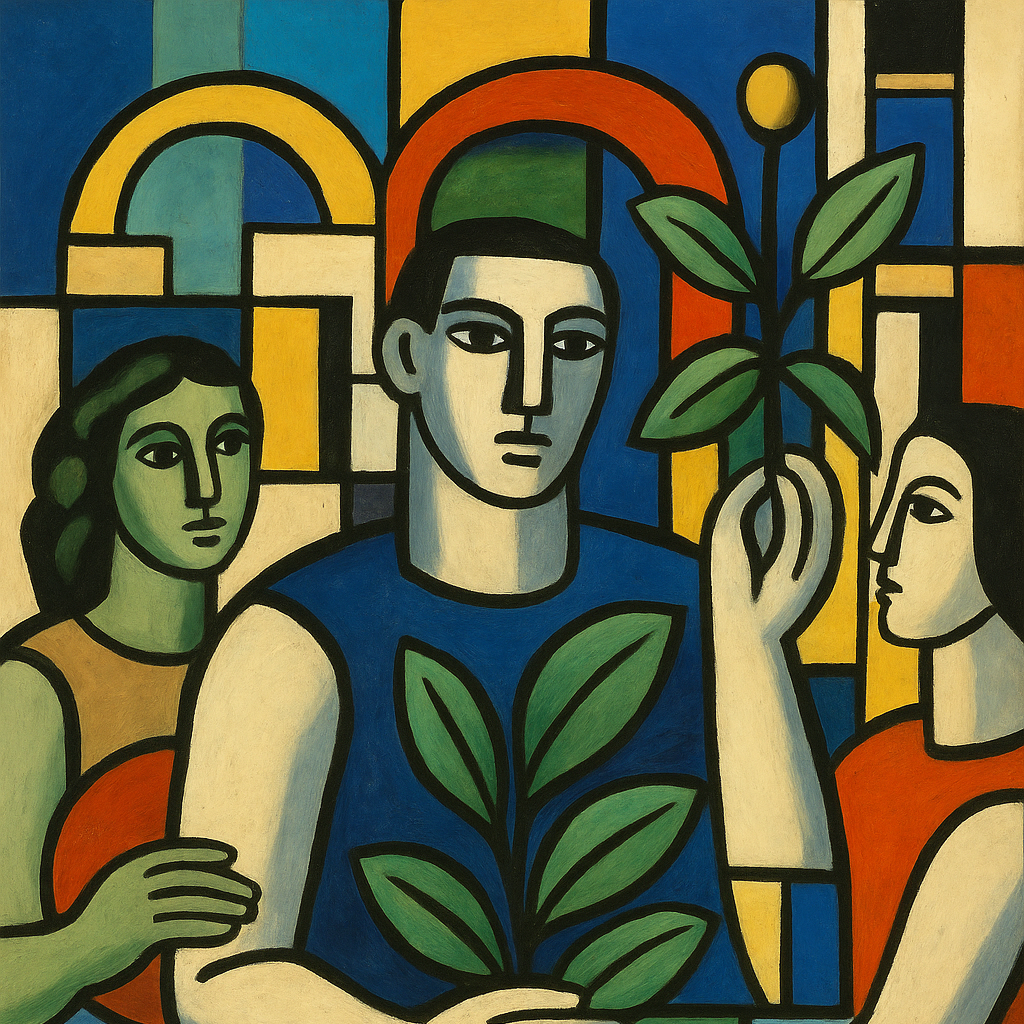
Why the future of health, work, and aging requires a new social contract.
Most revolutions arrive with banners or upheaval. But one of the most profound societal shifts in human history is unfolding quietly — in our lifespans. In 1950, global average life expectancy was 46 years. Today it’s over 73. In many countries, children born now have a real chance of living past 100. Yet the systems surrounding them — from education and employment to retirement and care — were built for a life that ended decades earlier.
We are extending life without redesigning the architecture around it. That dissonance is becoming unsustainable.
Aging in outdated systems
Today, a 60-year-old in Europe may be expected to retire. But they could have 30 or 40 years ahead. Should they be financially “done”? Socially invisible? Medically scripted into decline?
Our current frameworks offer few alternatives. In many OECD countries, the old three-stage model — education, work, retirement — still shapes policy. But it crumbles under demographic change, rising health costs, and the sheer unpredictability of long life.
We see longevity as a burden to manage, not an opportunity to redesign. So we cut pensions, raise retirement ages, and double down on productivity targets — without asking deeper questions:
What kind of life do we want to live over 100 years? How do we fund longer lives without hollowing out equity across generations? What does ‘productivity’ mean for someone at 77? What does ‘wellbeing’ mean in an era of burnout and climate anxiety?
Healthspan over lifespan
At Bluerain, we start from a simple premise: a long life must be a coherent one. That means moving from:
– Reactive sick-care to proactive wellbeing
– Lifespan counting to healthspan investment
– Career ladders to lifelong contribution ecosystems
– Isolated aging to community-embedded vitality
In partnership with thinkers, researchers, and builders, we are developing the Longevity Economy Lab — a testbed for rethinking the infrastructure of long life. This includes new ways for companies to support wellbeing; financial models that allow modular income, sabbaticals, and re-entry; and urban environments designed for connection, purpose, and access to nature.
The goal isn’t to delay death. It’s to expand the possibility of living well across the decades.
Redesigning work for longevity
The current work paradigm is broken — not just for the old, but for everyone. Younger generations face burnout before 35. Older workers face redundancy despite wisdom. Middle-aged talent is squeezed by productivity metrics, caregiving, and lifestyle debt. And all this unfolds as AI reshapes what work looks like.
In this context, longevity becomes a wedge issue — unless we redesign work itself. We need fluid models where people ramp up and down across decades, organizations that embed wellbeing as strategy, and cultures that prize collaboration across age and worldview. Metrics should value coherence over acceleration.
Our initiative Thrive–Uncompromised explores precisely this: regenerative wellbeing architectures that allow individuals, organizations, and ecosystems to thrive without trade-offs.
“Work must become more human if humans are to work longer.”
The intergenerational contract
Longevity isn’t just about the old. It’s about rebalancing the social contract — so that opportunity, resilience, and dignity are shared across age, race, gender, and geography. That means designing healthspan equity, fostering mentorship and reverse mentorship, and redistributing not just income but tools for self-determination.
As I shared at a recent symposium: ‘If we see longevity as a cost center, we will race to the bottom. But if we see it as a generational commons — something to steward — we begin designing systems that can hold complexity, humanity, and the long arc of life.’
Designing a life-ready society
So what might that future look like? A city where a 78-year-old co-founds a venture and a 23-year-old leads a policy lab. A company where sabbaticals are normal, and purpose is a metric. A healthcare system that measures flourishing, not just symptoms. An economic model that invests not in retirement, but in rhythms of contribution.
This is not utopia. It’s adaptation. It’s coherence. We must redesign institutions for life as it is becoming, not as it once was. Because the 100-year life is already here. The question is: will it be one of exhaustion — or one of clarity, vitality, and shared design?
***
About Bluerain *Coherence* Series
This essay is part of a broader collection exploring how valuation, healthspan, collaboration, longevity, and biodiversity can be re-aligned with the rhythms of life — at a pace that enables regeneration rather than exhaustion.
The purpose of this compendium is to:
– Contribute meaningfully to public discourse on systems change and intergenerational strategy
– Offer fresh language and framing for leaders navigating complexity
– Share what we are learning, unlearning, and building in real time
We welcome dialogue, respectful critique, and collaboration — to deepen a shared understanding of what it means to steward coherence in a time of disruption.
For inquiries or conversation, please reach the author via linkedin.com/in/martinstuder.
About the Author
Martin Studer is an entrepreneur and impact investor focused on sustainability and longevity. Trained as an economist and certified public accountant, he brings decades of leadership experience in finance, governance, and executive management. As founder of Bluerain Partners, a Swiss family office, he works globally on projects spanning climate resilience, healthspan innovation, and intergenerational stewardship.
About Bluerain Partners Group
Bluerain Partners Group AG is a privately held, multi-generation family office headquartered in Switzerland. We do not offer commercial services or raise external capital, while some of our subsidiaries may do.
Our work is anchored in long-term purpose, driven by the belief that meaningful progress requires curiosity, collaboration, and courage.
We engage globally in projects that span climate resilience, health span and longevity, and the evolving nature of work and technology. We do so through investing, advising, governance, and venture development — always with an emphasis on coherence across generations, disciplines, and geographies.
These essays are authored by Martin Studer in a personal capacity. They reflect his experience, reflections, and aspirations — and may not necessarily represent the formal positions of Bluerain Partners Group AG, its subsidiaries, affiliated projects, or partners.
info@bluerainpartners.com.